Museu Picasso de Barcelona Collection
Identification
Título: Museu Picasso de Barcelona Collection
Dates: 1948-2013
Volume and support:
- 450 boxes of text-based documents
- 31.776 photographs
- 20 cartographic records
- 1.578 graphic documents
- 61 audiovisual documents
Context
History of the creators
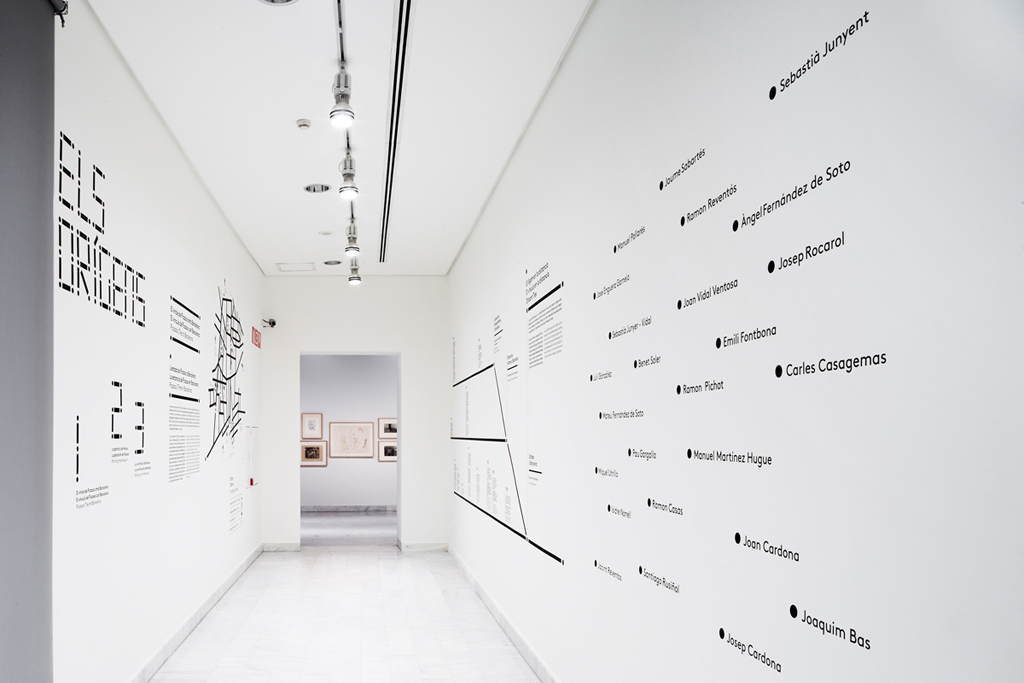
The Barcelona Picasso Museum is perhaps the greatest proof we have of the deep connection the artist felt for this city; it is an essential reference for understanding Pablo Picasso's formative years. Founded upon Picasso's request, it is the result of a joint effort and the will of a collective that included his personal secretary and great friend Jaume Sabartés; his wife Jaqueline Picasso; the people of Barcelona who so admired Picasso, and Barcelona City Council, which in the midst of Franco's regime acted with great discretion to make the artist's dream come true: a museum dedicated to Picasso in the city he so dearly admired.
Among the friends from Picasso's youth, one stands head and shoulders above them all. Jaume Sabartés met the artist in 1899, an encounter that would grow into a lifelong friendship and relationship based on mutual respect. On a visit to Barcelona in 1955, Sabartés, having been advised by Picasso, began to pull some strings to donate his collection of the artist's work to the city; the seed that would later become the Barcelona Picasso Museum. Sabartés was supported by the artist's friends and admirers from Barcelona who, guided by the notary Raimon Noguera, presented the idea to the city's mayor, Josep Maria de Porcioles, who accepted the proposal. As such, on 27 July 1960, the Pablo Ruiz Picasso Museum was founded by municipal agreement. That same year, work began on refurbishing the Berenguer de Aguilar palace to house the new Museum. The exhibition of the collection that Jaume Sabartés had given to the city was opened, discreetly, as was necessary at that time, on 9 March 1963. The Picasso collections already held at other Barcelona Art Museums were soon added, along with further donations from private collectors. Sabartés also continued to donate the signed engravings that Picasso gave him as gifts.
Jaume Sabartés died on 13 February 1968, but this did not prevent Picasso from continuing the work his friend had started, just as he had promised. In honour of the memory of his dear companion, Picasso continued to dedicate every engraving he produced to him and donate them to the Museum. In May of that same year, he also donated the paintings Las Meninas and Blue Portrait of Jaume Sabartés. The culmination of what can be considered the founding of the Museum came on 23 February 1970, when, in Mougins, Picasso signed over a substantial number of pieces from his youth, which he had been storing in Barcelona. In order to house this collection, Barcelona City Council extended the Museum into the adjoining building, the Baró de Castellet palace.
Since the time of its inception, the Picasso Museum has steadily evolved thanks to generous contributions from private collectors, the artist's heirs and valuable purchases made by Barcelona City Council. Today, it houses more than 4,200 pieces by the artist and offers an extensive programme of temporary, international exhibitions that have transformed it into a cultural landmark.
Scope and content
The Collection contains material produced and acquired by the Barcelona Picasso Museum as a result of the work, duties and services it has carried out since it opened; it can therefore be regarded as an institutional memoir. It also offers a historical reference that can be used to learn about the collection of work by Picasso held by the Museum.
As regards text-based material, the first section contains a series of documents on the inner workings of the governing bodies, the administrative organisation and the management of economic and human resources. Another particularly important series of documents describes how the Museum's heritage has been managed, regarding both the architectural heritage that houses the Museum and the Collection itself. But the most important documents are those that concern the temporary exhibitions organised and held at the Museum during its more than fifty-year existence, as well as the activities and publications derived from them. These documents account for seventy percent of the entire Collection and depict the evolution of an exhibition and how they have been managed from 1973 to the present day.
It is also worth highlighting the photographs that reproduce works from the Collection, which cover the entire trajectory and evolution of each piece, from its arrival at the Museum to the present day. We also find a collection of photographs and audiovisual documents that reflect the life of the Museum and its many activities.
Another interesting aspect is the posters and other communication material produced over the years, which offer a visual record of the Museum's exhibitions and activities.
Accession details
The entire collection was sent to the Centre for Knowledge and Research between 2009 and 2012, without a formal transfer, from the storeroom and staff offices at the Museum, where it was being held.
Related exhibitions