Ubu roi (King Ubu) began as a school prank. Alfred Jarry, along with two classmates from the Rennes secondary school, caricatured their physics teacher, Félix-Frédéric Hébert: strict, pot-bellied, and doing experiments that almost never went well. The students drew him with big ears, prominent teeth, and absurd gestures, turning him into the perfect antihero.
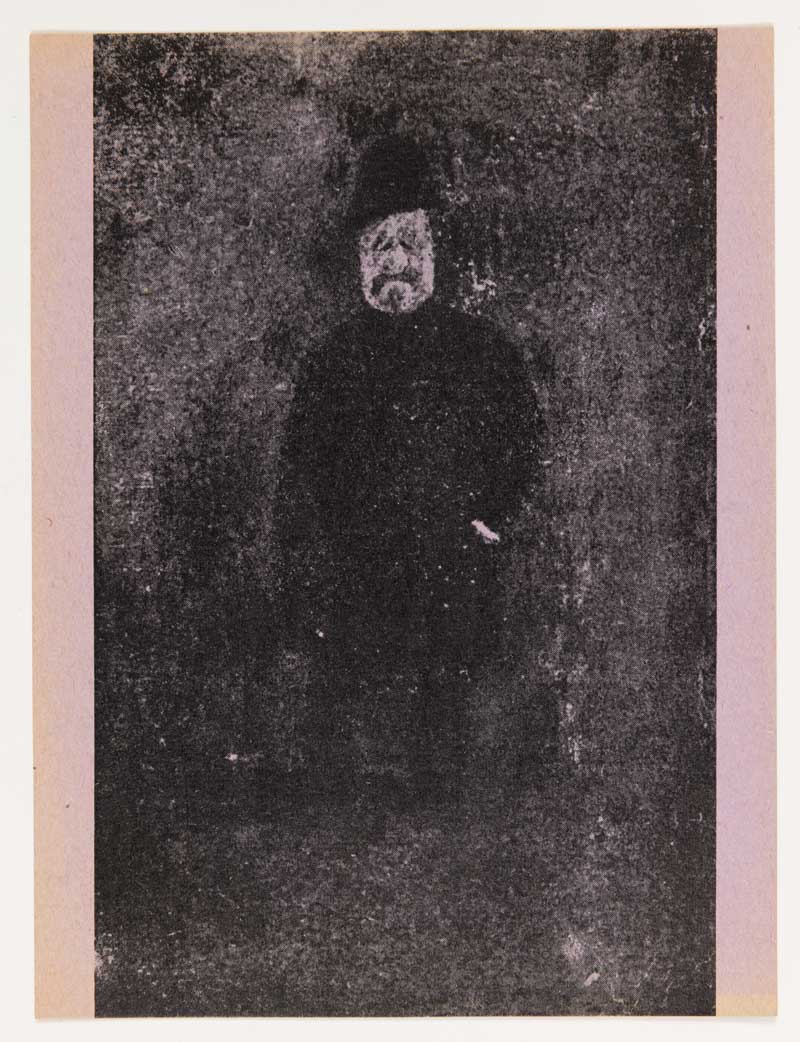
Reproduction of the portrait of Monsieur Hébert, Alfred Jarry’s teacher at the Lycée de Rennes and inspiration for the character of Ubu, made by Jarry. Postcard from the Collège de ‘Pataphysique, Paris, n.d.14 × 10.5 cm. Private collection
That school prank did not remain in a notebook. Jarry and his friends began to bring the character to life, first in readings and small, informal performances, and then in shows with handmade puppets on the terraces of his house. The rigid movements, exaggerated voices and famous pear-shaped belly (la Gidouille) accentuated Ubu's grotesque character. These early scenes were the laboratory in which Jarry experimented with humour, absurdity and parody.
Finally, the play reached the Théâtre de l'Œuvre in Paris (1896). Ubú's first word — a resounding ‘merdre!’ — caused half the audience to flee. The scandal marked a turning point in French theatre and established Ubu as a symbol of subversive and grotesque comedy.
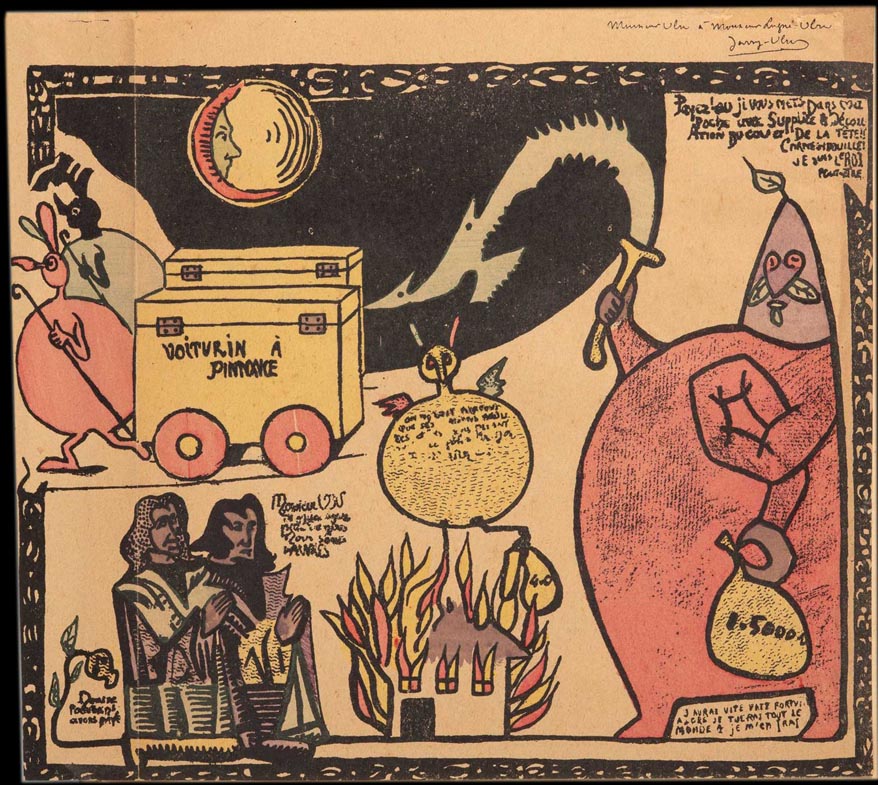
Poster for the performance of Ubu roi at the Théâtre de l’Œuvre, 1896. Private collection. Photograph: Museu Picasso, Barcelona / ArtWork.
Ubu roi thus became a fierce and grotesque satire against the bourgeoisie, revolutionising theatre and is considered the beginning of the theatre of the absurd. Ubu, the archetype of cynicism and ridiculous authority, continues to fascinate and unsettle even today.


